
One of the core objectives of the WOOD4PLASTIC project is to bridge the gap between scientific research and industrial deployment of biobased materials. Achieving this requires close collaboration between technology centers and industrial partners, combining material development, processing expertise and scalability considerations from the very beginning.
In this context, WOOD4PLASTIC is making important progress through the joint work of two consortium partners: Aitiip and Fibenol. Their collaboration focuses on advancing PLA–lignin blends designed for injection molding, a key industrial processing technique widely used in the plastics sector.
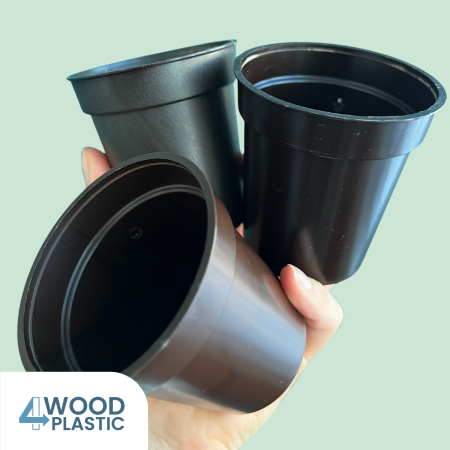
From formulation development to injection molding trials
Aitiip Technology Centre is leading the practical development activities related to processing and manufacturing. The initial phase of the work focused on optimizing the formulation and processing conditions of PLA–lignin blends, addressing challenges such as material homogeneity, process stability and suitability for injection molding equipment.
Following this optimization stage, the project has now reached an important objective: the first injection molding trials using lignin-based PLA blends. These trials represent a decisive step forward, as they validate the material performance beyond laboratory-scale experiments and under conditions closer to real industrial manufacturing.
“The major challenge of bio-based materials is scalability. The success of these initial injection trials confirms that our lignin blends are compatible with standard industrial machinery. This makes it easier to move from scientific research to large-scale production of more sustainable everyday products.”
— Aitiip Technology Centre representative
Injection molding is particularly relevant for WOOD4PLASTIC because it enables the production of complex, high-precision components at scale, making it a critical pathway for introducing biobased materials into everyday applications.

Fibenol’s role in enabling scalable lignin-based bioplastics
Fibenol supports this development by ensuring that lignin can perform reliably and consistently in scalable bioplastic formulations. Drawing on its expertise in lignin production and characterization, Fibenol contributes across several key areas of the development process:
- Selection of the most suitable lignin types for blending with PLA, considering both material performance and processability
- Guidance on lignin processing and formulation strategies to support stable injection molding
- Support in the analysis and interpretation of the results obtained during the molding trials
- Strategic input on scale-up pathways, with a view toward future industrial production
As Iuliana Ribca from Fibenol highlights:
“Moving from laboratory-scale blends to injection molded products is a key step toward industrial relevance. These trials confirm the practical potential of lignin-based materials in everyday products.”
Towards an industrial demonstrator
The successful completion of these first trials lays the foundation for the next stages of the project. The WOOD4PLASTIC consortium will continue refining the material formulation and processing parameters, with the aim of further improving performance, consistency and industrial robustness.
Upcoming activities will include additional injection molding trials in collaboration with industrial partner Thermolympic, targeting the project’s final product demonstrator: a biobased dehumidifier component. This demonstrator will showcase how lignin-based materials derived from wood residues can be integrated into existing plastic processing routes, contributing to more sustainable and circular material solutions.
Through this collaborative approach, WOOD4PLASTIC continues to advance its mission of turning wood-derived lignin and sugars into viable, industrially relevant bioplastics compatible with current manufacturing technologies.
Stay tuned with the latest news on our blog!