Plastic pollution remains one of the most pressing environmental challenges of our time. Most of the plastic bags and packaging we use every day are made from fossil fuels, contributing to greenhouse gas emissions and generating waste that can take centuries to break down. As the European Union pushes forward with stricter regulations on single-use plastics and a stronger commitment to circularity, projects like WOOD4PLASTIC are demonstrating that there is a real, scalable alternative already within reach.
WOOD4PLASTIC’s approach starts with a resource that is often overlooked: hardwood leftovers from agroforestry activities. By extracting sugars and lignin from this residual biomass, the project’s partners are developing biomaterials that can replace conventional fossil-based plastics in real industrial applications, without needing to reinvent the manufacturing processes already used across the packaging industry. This means a faster, more realistic path to market for solutions that reduce both plastic waste and dependence on fossil raw materials.
One of the project’s demonstrators putting this vision into practice is the work being carried out by Dagöplast, who has just reached an important milestone in the development of bio-based bags for two different everyday uses.
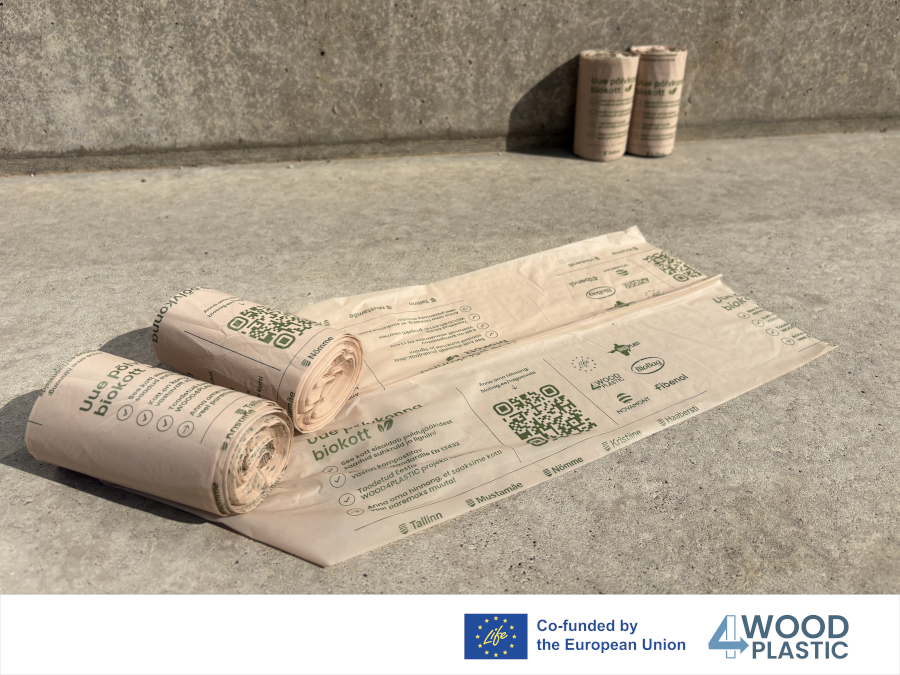
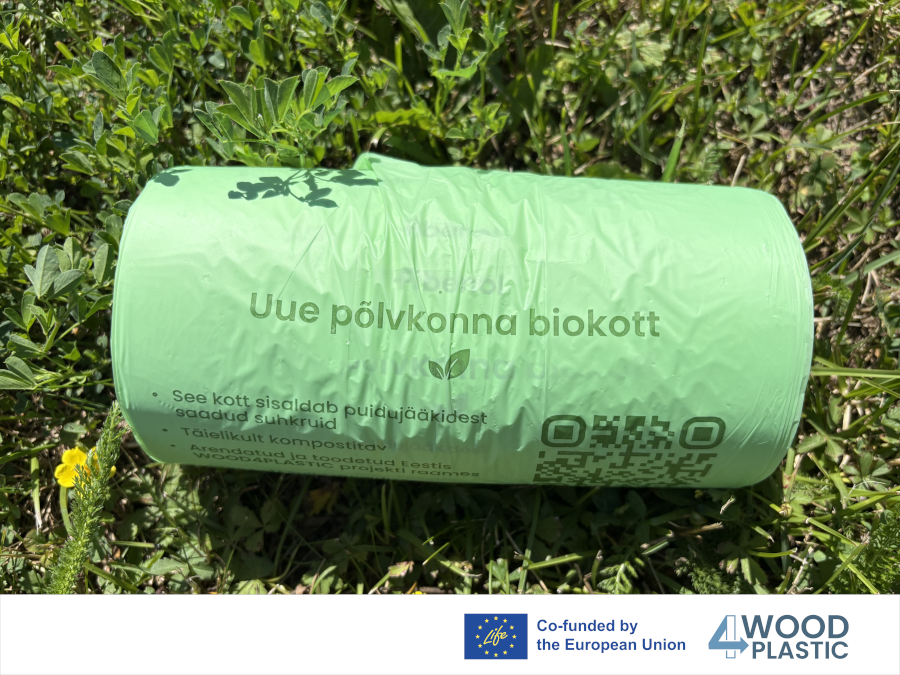
In June, Dagöplast produced and distributed fruit and vegetable bags at farmers’ markets, giving shoppers a first, tangible contact with the kind of products WOOD4PLASTIC is working to bring to market. Just a few months later, in early September, the team completed the production of 10L OFMSW (Organic Fraction of Municipal Solid Waste) bags, this time incorporating lignin, one of the key biomaterials being developed within the project.
Both products are already in the hands of real users. The fruit and vegetable bags have been handed out directly at farmers’ markets, while the OFMSW bags will now be delivered to different municipalities for distribution to private households, so people can start using them for everyday organic waste collection. To make sure this testing phase generates useful insights, each bag includes a printed explanation of what the product is and a QR code that allows users to share their feedback directly, an approach that puts real-world experience at the centre of the project’s development process.
This kind of direct engagement with end users is exactly what the demonstration phase of WOOD4PLASTIC is about: moving beyond the lab to prove that these materials work not just in technical tests, but in the hands of the people who will use them every day. Every piece of feedback collected through these QR codes will help refine the products further, before scaling towards broader commercial adoption.
It’s also a reminder of the bigger picture. Every fossil-based bag replaced by a compostable, bio-based alternative made from wood residues is a small but real step towards reducing Europe’s reliance on fossil raw materials and cutting the plastic waste ending up in landfills, incinerators, or the environment. Multiplied across the millions of bags used daily for grocery shopping and waste collection, these changes have the potential to make a meaningful dent in the plastic footprint of everyday life.
Dagöplast’s progress is an encouraging milestone, but as the team themselves put it, it’s not the end of the journey. More bio-based products developed within WOOD4PLASTIC are still to come, and the project will keep listening closely to what end users have to say as the testing continues.